When we think of luxury fashion, of haute couture, we think of meticulous craftsmanship, storied Parisian ateliers, of rarity, and of beauty born slowly. Yet today behind the doors of the most prestigious fashion houses, there is a profound digital revolution unfolding. The rise of a new symbiotic ecosystem where technology, heritage and storytelling converge into what can be best described as the Digital Atelier. While it may be construed by some as a breach of tradition, a contemporary intrusion into luxury’s sacred halls, it is in fact the natural evolution of creativity itself.
Quality is remembered long after the price is forgotten.
— Gucci Family Motto, coined by Aldo Gucci
Luxury Has Always Been Technological
Luxury has never been hostile to innovation; it has always embraced it selectively, on its own terms. The great couture houses were among the first to adopt them: Chanel embraced synthetic fabrics to liberate women’s bodies from the rigid strictures of early-century dress. Dior’s new look fused romance with industrial pattern-making to achieve architectural precision. Schiaparelli transformed the zipper, a utilitarian invention, into an emblem of modern couture, and Balenciaga reimagined the garment as a site of experimentation, treating construction, volume, and material as systems to be engineered. What defined luxury is not the aversion of technology, but its quiet mastery over it.
The Digital Atelier continues this lineage.
When Craft Becomes Code
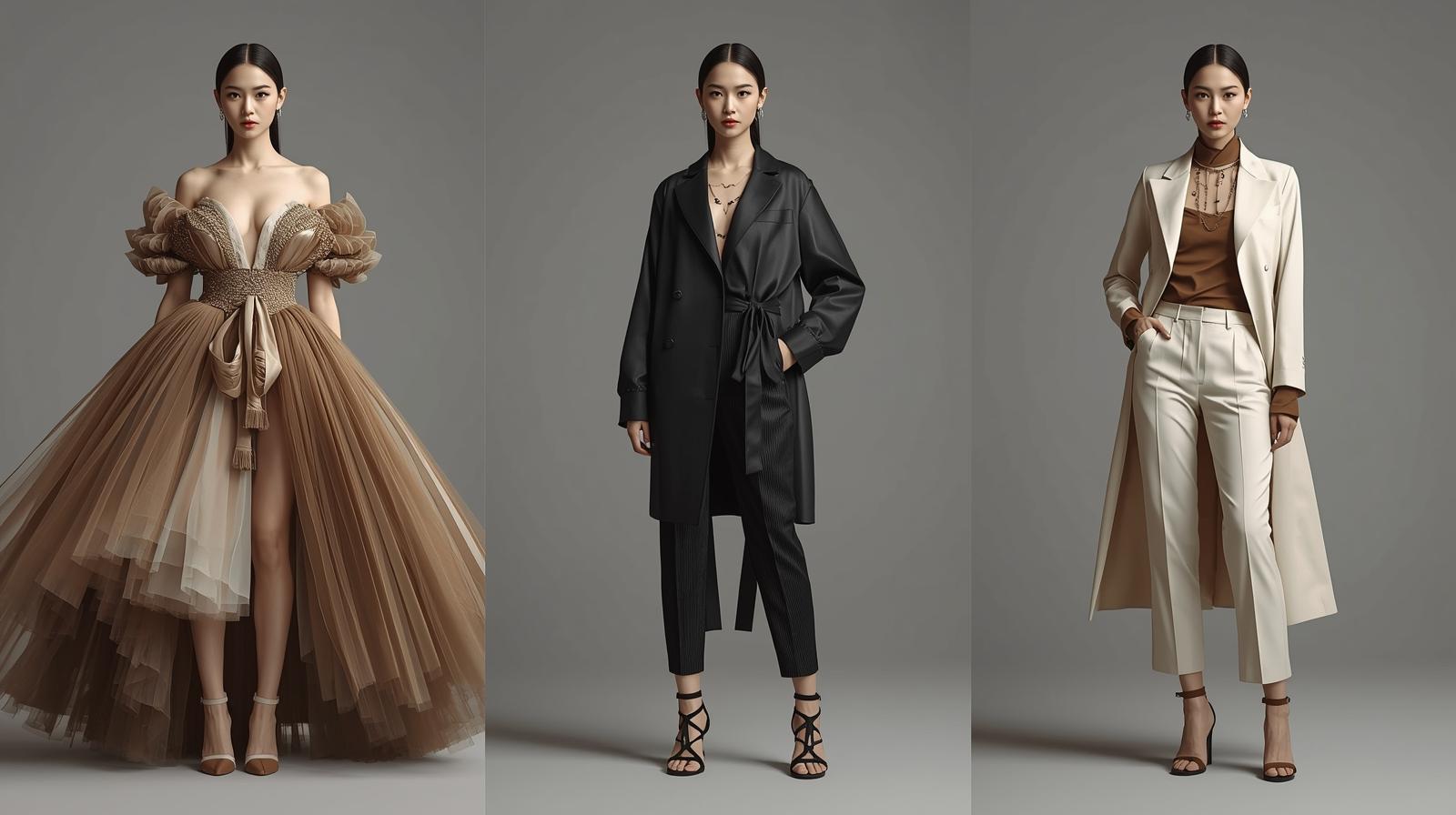
In the digital atelier, design often begins long before fabric is touched. Luxury houses now work in three dimensions, using platforms such as CLO3D, Browzwear, and Unreal Engine to build hyper-realistic digital garments before a single physical sample exists. Proportions are refined, drape is tested, movement is simulated, and light is studied, all within virtual environments calibrated to mirror reality.
The impact is both creative and consequential. Sampling waste is reduced, experimentation expands, and designers are liberated from the financial and environmental costs of constant revisions. In this new paradigm, craftsmanship is no longer diminished by technology; it is sharpened by it.
The future of fashion is not about technology replacing designers, but about how designers can use technology to create new forms of beauty.
— Amber Jae Slooten, co-founder of The Fabricant
The Rise of Intelligent Personalization
Traditionally, luxury revolved around private salons, long-term client relationships, and custom fittings, which was threatened in the digital era by “Scale”, with the biggest concern being how to preserve discretion and personal connection in an online, global marketplace, whilst preserving the identity of the brand.
Artificial Intelligence has emerged as a pragmatic solution. Luxury brands now use AI-driven personalization systems to replicate the role of a trusted sales associate. These systems analyze browsing behaviour, purchase history and preference patterns, to refine curation. Christian Dior, for instance, has invested in advanced digital clienteling tools that support personalized recommendations across channels, while Ralph Lauren’s “Ask Ralph”, developed in partnership with Microsoft, functions as a conversational stylist rather than a transactional search tool. Here, technology is discreet, designed to integrate seamlessly whilst the brand voice remains the protagonist.
Luxury Beyond the Physical
For the new generation of customers, identity is no longer confined to the physical world. Digital platforms, like games, virtual environments, and social spaces have become legitimate sites of self-expression. Luxury fashion has responded with characteristic virtual garments. Balenciaga’s collaboration with Fortnite, for example, transformed digital skins into recognizable fashion statements, while its virtual runway presentations used scanned models to achieve hyper-realistic digital bodies.
Gucci’s experiments on Roblox demonstrated that digital luxury could command real economic value, with virtual bags selling at prices exceeding their physical counterparts. Louis Vuitton extended its brand narrative into gaming through Louis: The Game and collaborations with League of Legends, translating heritage into interactive experience. Luxury has always been about distinction, symbolism, and access. In digital worlds, these principles remain intact, only the medium has changed.
Provenance, Permanence, and the Fight Against Counterfeits
As luxury becomes increasingly global and digital, authenticity has grown more difficult to safeguard. Counterfeiting now operates with technological sophistication, forcing luxury brands to formalize how trust is established.
Blockchain-based digital product passports are emerging as the industry’s most credible response. These secure records document a product’s origin, materials, and ownership history, making authenticity verifiable rather than assumed. The Aura Blockchain Consortium, founded by LVMH, Prada Group, and Richemont, has positioned blockchain infrastructure as a shared standard across luxury, while Prada’s Timecapsule drops paired limited physical releases with NFTs as proof of authenticity.
Regulation is accelerating adoption. The European Union’s forthcoming Digital Product Passport requirements for textiles will make traceability mandatory, transforming transparency from a competitive advantage into a baseline expectation.
Automation Without Replacement
Luxury manufacturing faces a structural challenge: an aging artisan workforce and a diminishing pipeline of skilled craft labor. Technology’s role here is often mischaracterized.
Automation within luxury is not designed to replace artisans, but to support them. Robotics are increasingly deployed for repetitive and physically demanding tasks, allowing craftspeople to focus on precision, judgment, and finish. Italian suppliers such as Galli have adopted this hybrid approach, while brands like Levi’s use digital simulation to model garment aging and reduce resource consumption prior to production.
These systems preserve craftsmanship by reducing strain and increasing longevity, ensuring that human expertise remains central to the process.
Evolution does not mean compromise. In the Digital Atelier, tradition is preserved, technology works silently, and every creation reflects the meticulous care that has always defined true luxury.
AI doesn’t have passion, a soul, or emotion — it cannot replace original creativity, but it can take what’s already there and push it somewhere new.
— Designer Norma Kamali on AI as a catalyst rather than a substitute